
GearUP
Technologies Used
Game Info
Gallery
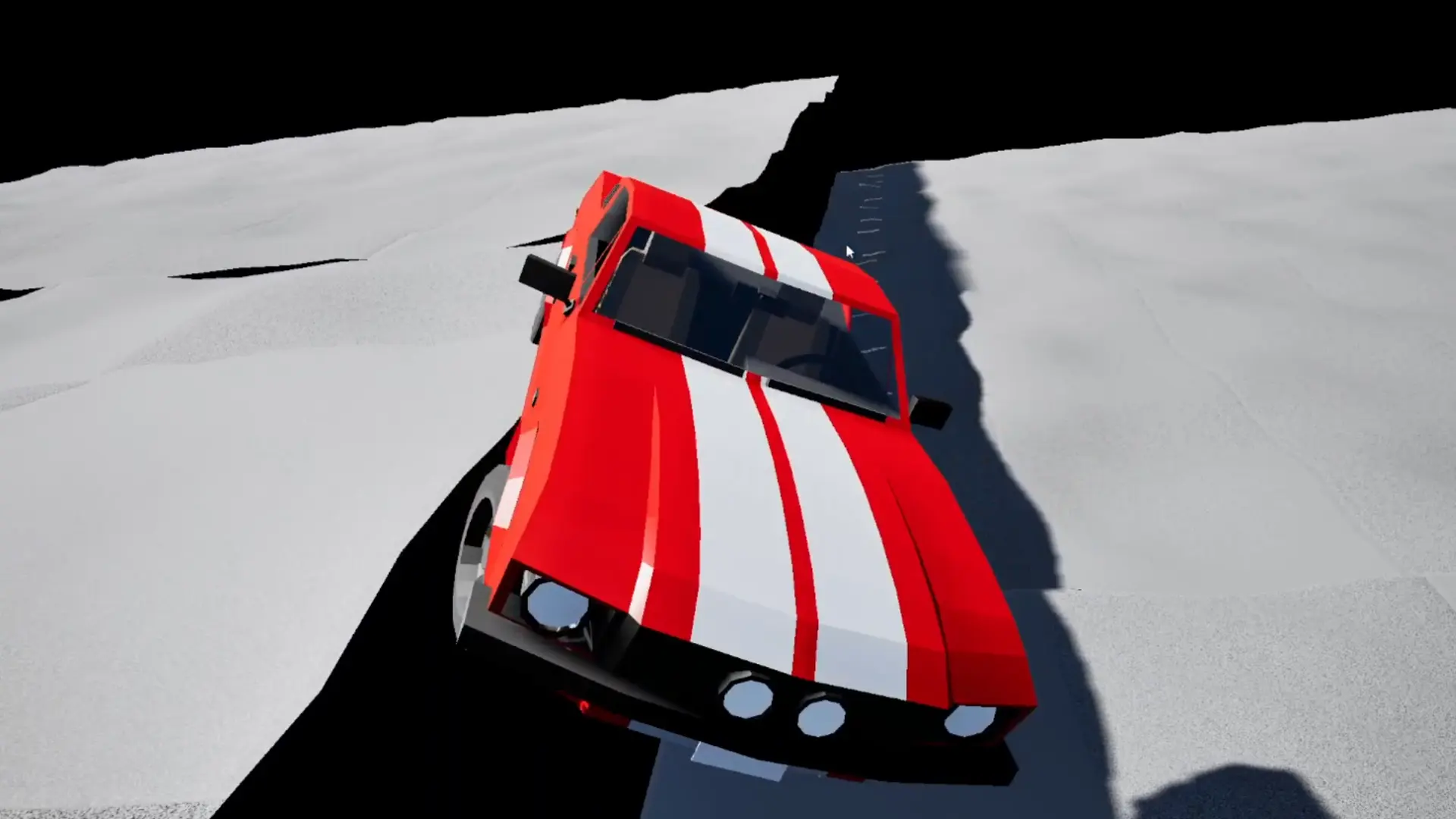
Car showcase and procedural world generation
GearUP is not a single game. It is a platform where each game mode runs as an independent experience sharing one vehicle progression system. The architecture is deliberately modeled after the Roblox ecosystem in terms of modularity, but built on a deterministic C++ and Chaos physics stack in Unreal Engine 5.
The landscape generation system runs on background threads using a multithreaded task graph. Terrain tiles are generated deterministically from a seed so that any player on any device generates identical world geometry from the same parameters. This is a hard requirement for multiplayer consistency: no server streaming of terrain data is needed because every client reconstructs the world locally from the seed.
The physics layer uses UE5 Chaos physics with per-vehicle tuning multipliers stored in a DataAsset. This means the gap between arcade and simulation behavior is not coded but configured. Switching a vehicle from arcade to simulation physics requires changing DataAsset values, not engine code. This scales cleanly to a large vehicle roster and lets the platform run at 45 FPS on 3GB RAM mobile hardware by using lower-fidelity DataAsset profiles for those devices.
The Indian vehicles in the current build are the first regional content module. The architecture natively supports adding vehicles from any culture: new DataAssets for physics, skeletal meshes for the vehicle body, and audio assets. No game mode code changes are required.
Gameplay
Core Mechanics
Game Modes
Difficulty
Key Features
Multithreaded deterministic landscape generation ensuring client-side world reconstruction from seed
Data-driven Chaos physics tuning per vehicle via DataAssets, no code changes for arcade/sim modes
Platform-scale game mode architecture: each mode is an independent experience on shared vehicle progression
Scalable device profiles: 45 FPS confirmed on 3GB RAM mobile hardware with low-fidelity DataAsset overrides
Indian vehicles as the first regional content module (Rickshaws, State Buses, Trucks)
Hybrid map system: curated handmade levels and procedurally generated open worlds
Data-driven content pipeline enabling rapid addition of new regional vehicle modules
Architectural Implementation
Multithreaded Deterministic Terrain
Landscape tiles are generated on UE5 async task graph worker threads using a seeded noise stack (Perlin + Voronoi). The seed is synchronized across all clients at session start. Each client generates identical geometry independently, eliminating server terrain streaming overhead and ensuring consistent collision surfaces for vehicle physics.
Data-Driven Physics Abstraction
All vehicle physics parameters (suspension stiffness, torque curves, drift coefficients) are stored in UDataAsset objects. Device capability is read at startup and a corresponding profile DataAsset is selected (Mobile Low, Mobile High, PC). This allows a single vehicle skeletal mesh to behave differently across device tiers without forking code paths.
Modular Game Mode Layer
Each game mode is implemented as a standalone GameMode C++ class with a shared VehicleProgressionSubsystem that persists vehicle state across mode transitions. Adding a new mode requires implementing the IGameMode interface and registering a DataAsset descriptor, not modifying the platform core.
Performance Benchmarks
45 FPS sustained on 3GB RAM Android devices with low-fidelity DataAsset profile
Terrain generation completing under 16ms per tile on background thread (no frame hitches)
Vehicle physics at consistent 60Hz on PC with full Chaos simulation